Green Chemistry or Bio-Based Chemistry? Mind the confusion
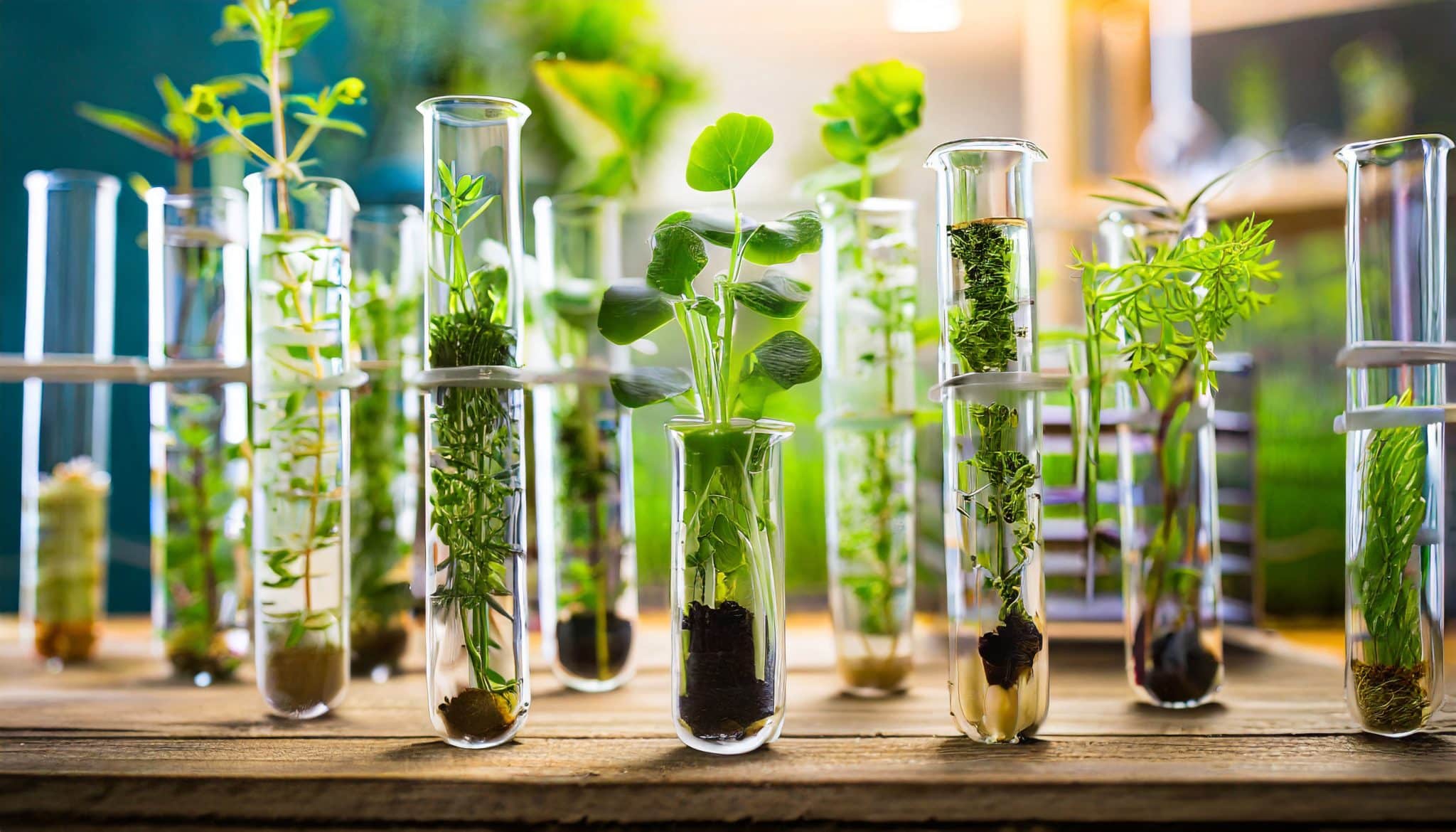
The chemical industry is one of the largest industrial consumers of oil and gas, according to the IEA. For the last 30 years, researchers, big corporations and start-ups in the sector have worked to overcome this dependency on petroleum, reduce the use or generation of hazardous substances and create a cleaner or “greener» chemical industry.
But do you really know what you are buying into when you collaborate with a company that claims to do “green chemistry”?
Green chemistry does not necessarily mean plant-based chemistry
One of the first mistakes is thinking that “green” automatically refers to “vegetal” or “plant”. Green chemistry principles do indeed call for using renewable resources but there is much more to it than replacing feedstock.
Historically, green chemistry, also called sustainable chemistry, is based on 12 principles introduced in 1998 by Paul Anastas et John C. Warner, two scientists and entrepreneurs who are considered to be the fathers of this concept.
Prevention and eco-conception are the foundation of green chemistry. It marked a real revolution in the chemical industry and a source of inspiration for other sectors. Instead of regulating an acceptable level of hazardous substances or managing them once they had been produced as residues, green chemistry aims to “reduce or eliminate their use or generation in the design, manufacture and application of chemical products.”
Anastas and Warner believe that green chemistry should lead to many positive externalities in addition to minimizing environmental impact, including: increased worker safety, reduced costs for waste handling and disposal litigation, improved efficiency in the use of resources, and minimizing the release of “waste,” or non-used molecules, into the environment.
All biobased products are not created equally
If your objective is to replace fossil resources in your supply chain and purchase biobased raw materials (transition in procurement), it is very important to know the composition of what you are buying. The concept of a biobased product relies on precise terminology, norms and chemical analysis
A biobased product is a product — material, intermediate, semi-finished or finished product — that is entirely or partially derived from biomass such as that produced from plants, trees or animals. As biomass can have undergone physical, chemical or biological treatment, and that the term «bio-based product» refers to products wholly or partly derived from biomass, it is important to use analysis techniques to determine the amount of biobased components in a given product.
At AFYREN, we produce 100% biobased chemical products from renewable raw materials through a dedicated process following the segregated biobased chemistry approach. Our zero industrial waste process utilizes renewable feedstock, adhering to waste prevention and atom economy principles. The production process involves enzymatic catalysis, a less hazardous alternative to existing processes. Our chemical products have an equivalent end-of-life to market counterparts and naturally biodegrade in various applications.
The environmental impact of our products undergoes evaluation through Life Cycle Assessment (LCA), enable transparency and accountability.
If you know biogenic carbon, you know your biobased products
Biogenic carbon, stored in, sequestered by, and emitted through organic matter, includes common feedstocks like trees, plants, and soil. Derived from the atmosphere, biogenic carbons arrive via a short cycle in finished products. However, radiation from the atmosphere causes the appearance of a measurable percentage of the radioactive isotope Carbon-14.
Radiocarbon (carbon 14) is an isotope of carbon that is unstable and weakly radioactive. In contrast, non-biogenic carbons stored in fossil fuels lack this Carbon-14. Measuring the percentage of C-14 in products, known as the radiocarbon method, evaluates the share of fossil-based carbon versus biogenic carbon. This method, familiar in archaeological contexts, provides insights into the age and sustainability of products.
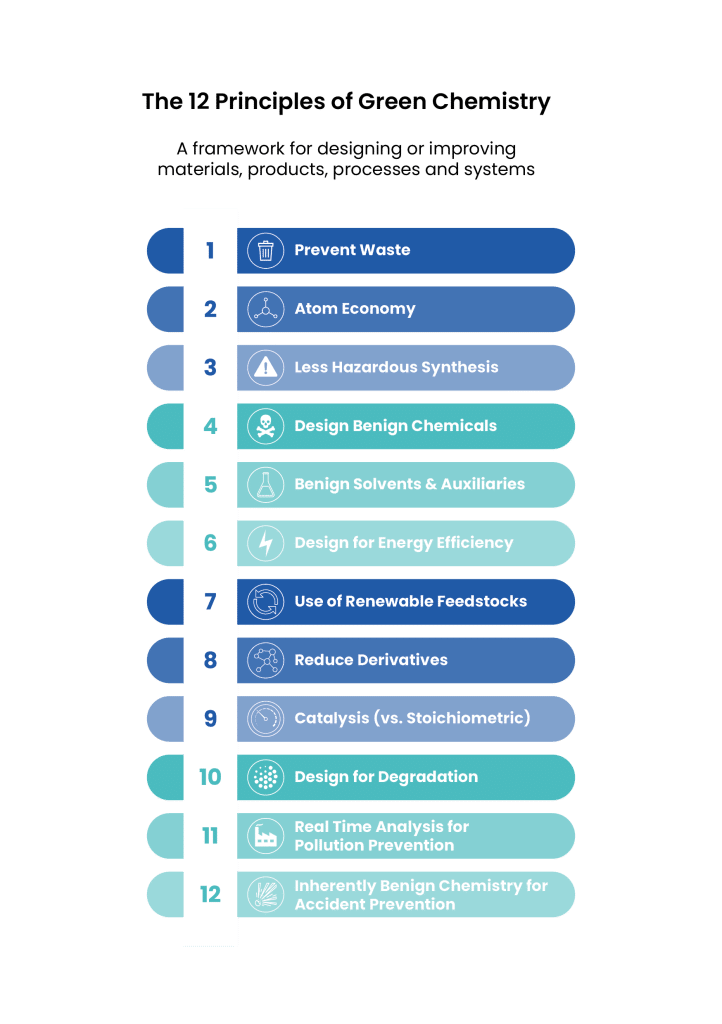
In conclusion, delving into green chemistry and biobased innovations requires informed decision-making, rigorous assessments, and a commitment to sustainable practices. AFYREN’s dedication to the 12 principles of green chemistry positions us as leaders in eco-friendly innovations, providing a blueprint for a greener, more sustainable future.
Last news
AFYREN raises €7 million through share capital increase to support its industrial deployment
Press release
AFYREN obtains FSSC22000 certification for its AFYREN NEOXY plant, recognizing excellence in food safety quality
News post Press release
AFYREN NEOXY: first significant revenue and growing production in 2025
News post Press release AFYREN confirms drawdown of €7 million in previously secured financing for its subsidiary AFYREN NEOXY
News post Press release
AFYREN awarded Silver Medal by EcoVadis for CSR performance, ranking in the top 8% worldwide
Press release
AFYREN and ESSE Skincare begin partnership to offer 100% natural cosmetic solutions with enhanced skincare performance.
Press release AFYREN raises €23 million through share capital increase to finance optimization and expansion of unique biorefinery AFYREN NEOXY
Press release